TL;DR:
- Cycling through endurance, hypertrophy, maximum strength, and power training supports healthy aging in women over 40.
- Personalized coaching ensures safe progression, condition-specific modifications, and measurable results within weeks.
- Low-load blood flow restriction training offers a joint-friendly alternative that yields strength gains comparable to traditional methods.
Four types of strength training matter most for longevity in women over 40: endurance, hypertrophy, maximum strength, and power. Each mode targets a different physiological mechanism, and cycling through all four is what keeps your muscles, bones, and metabolism working together as you age. A landmark April 2026 review published in Medicine and Science in Sports and Exercise synthesized data from 137 reviews covering over 30,000 adults and confirmed that even modest, consistent resistance training significantly improves muscle strength, size, power, and physical function. You do not need to push to complete muscle failure to see those gains.
Here is what each mode delivers:
- Endurance training builds fatigue resistance in muscle fibers and supports cardiovascular health, helping you sustain daily activity without tiring.
- Hypertrophy training increases muscle size, which directly supports metabolic rate and bone density, two areas that decline sharply after 40.
- Maximum strength training develops the raw force your body needs for fall prevention and functional independence.
- Power training trains your nervous system to generate force quickly, which matters every time you catch yourself from a stumble or rise from a chair.
High Definition Training coaches women over 40 across all four modes, with personalized plans tailored to their specific goals, limitations, and schedules.
Table of Contents
- What types of strength training for longevity should you actually do?
- Is low-load blood flow restriction training right for you?
- How personalized coaching makes the difference for women over 40
- Key Takeaways
- Strength training built for women over 40 in the Bronx
- FAQ
What types of strength training for longevity should you actually do?
The four modes are not interchangeable. Each one stresses your muscles differently, and that variety is the point. Strength expert Pete McCall has noted that cycling through modes creates the comprehensive fatigue stimulus needed to maintain muscle architecture as you age. Sticking to only one mode, say, always lifting moderate weight for 12 reps, leaves gaps in your neuromuscular fitness that accumulate over years.
Endurance training
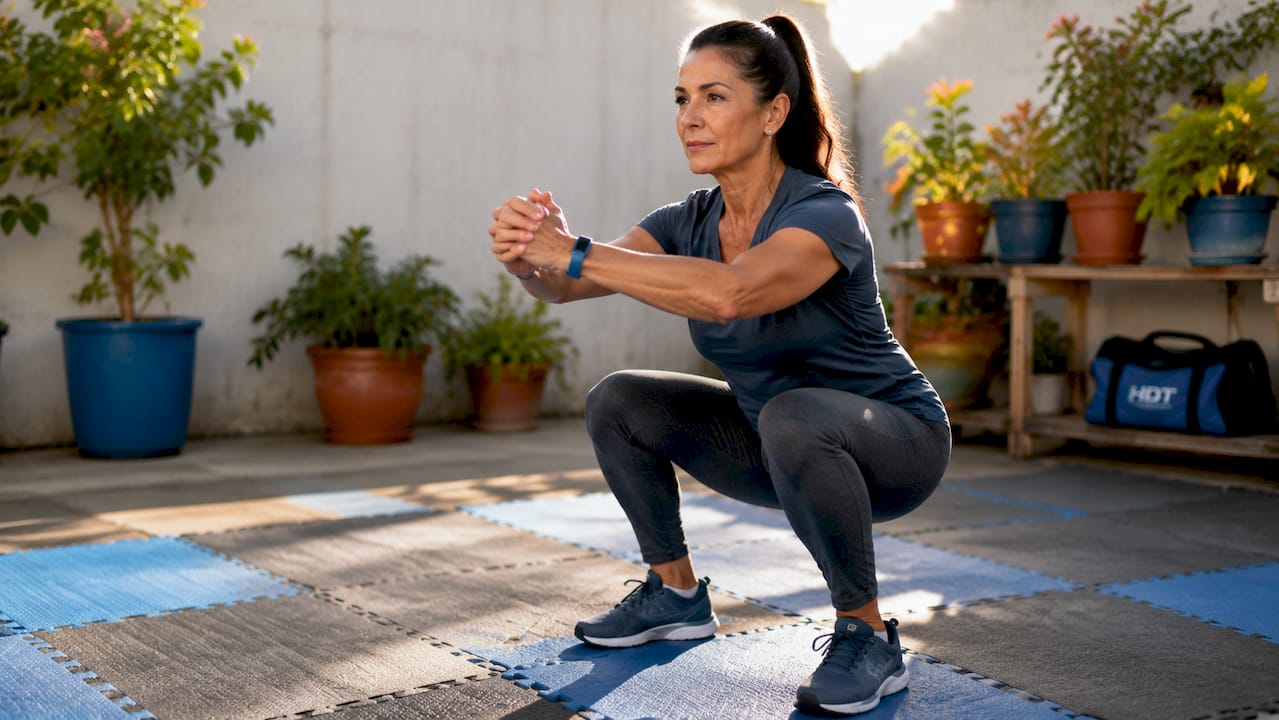
Endurance work uses lighter loads for higher repetitions, typically 15 or more reps per set. The goal is not cardiovascular fitness in the aerobic sense. It trains your muscle fibers to resist fatigue, which translates directly into sustained walking, climbing stairs, and carrying groceries without your legs giving out. For women over 40, this mode is also the most accessible entry point because the loads are low and the technique demands are forgiving.
Hypertrophy training
Hypertrophy training, generally 8–12 reps at moderate load, is the mode most directly tied to metabolic health and bone density. Muscle tissue is metabolically active. More of it means better blood sugar regulation, lower inflammation, and a stronger structural framework for your skeleton. The American Heart Association identified strength training as a longevity survival activity in 2024, and hypertrophy work is the mode most people picture when they hear “resistance training.”
Maximum strength training
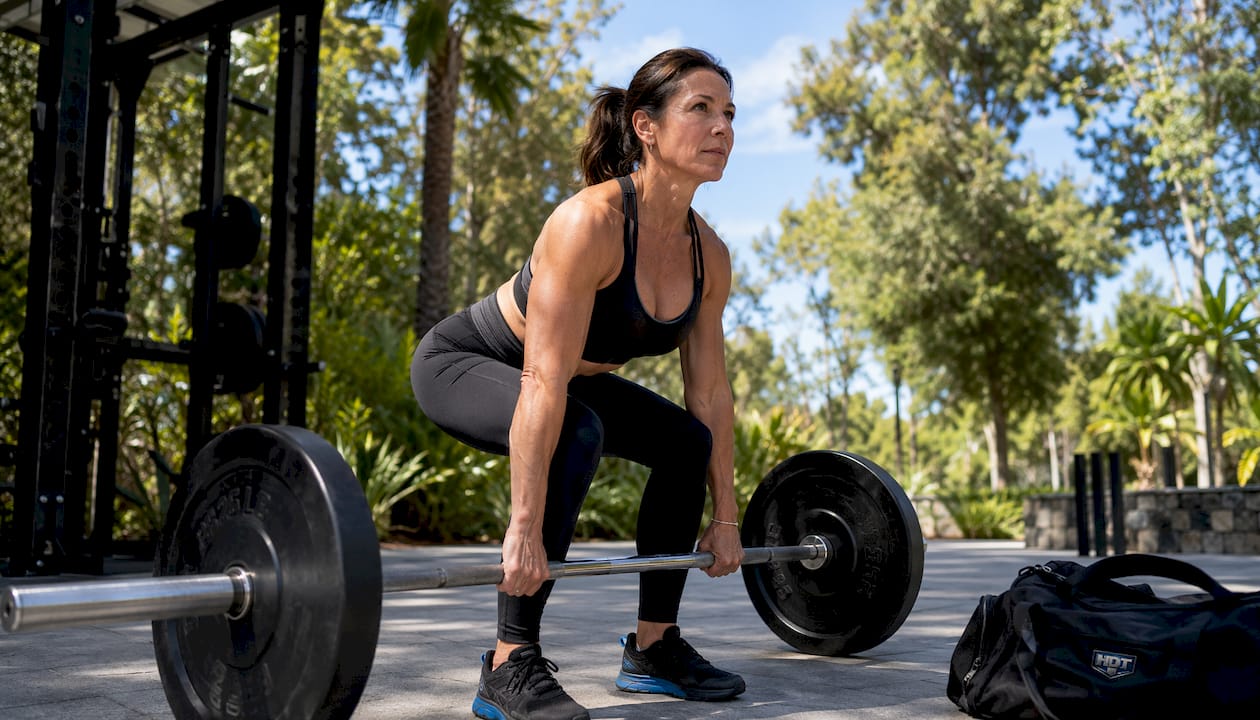
Maximum strength work uses heavier loads, typically at or above 80% of your one-rep maximum, for low repetitions (3–5 per set). This is where neuromuscular adaptations are greatest. Your nervous system learns to recruit more muscle fibers simultaneously, which improves your ability to produce force rapidly. For older adults, that translates to fall prevention and the ability to handle unexpected physical demands. It sounds intimidating, but with proper coaching and a horizontal leg press rather than a loaded barbell squat, it is both safe and highly effective.
Power training
Power training uses moderate loads (roughly 30–70% of one-rep maximum) performed with a fast concentric phase. The research is clear that power training enhances physical function more than slow-velocity training does, because daily life requires rapid force production far more often than it requires maximal strength. Getting up from the floor, stepping off a curb, reaching for something before it falls. All of these are power movements.
Pro Tip: Use a slow eccentric phase of 2–3 seconds when lowering the weight, then shift to an explosive concentric phase. This tempo approach maximizes neural adaptation while keeping joint stress manageable.
A well-structured program rotates through all four modes across weeks or training blocks. Variable resistance training, which combines constant and variable load types, produces the most comprehensive functional gains, including better gait speed and faster neuromuscular response. For women focused on athletic longevity, that breadth of adaptation is the whole game.
Is low-load blood flow restriction training right for you?
Low-load blood flow restriction training, or LL-BFRT, is a clinically validated alternative for women who cannot tolerate the joint stress of traditional high-load lifting. It works by applying a cuff or wrap to partially restrict venous blood flow in a working limb, creating a metabolic environment that mimics heavy loading with a fraction of the mechanical stress.
The clinical evidence is compelling. LL-BFRT produces similar gains in muscle strength and hypertrophy as high-load resistance training, with significantly lower joint stress. That makes it particularly relevant for women over 40 dealing with osteoarthritis, post-surgical recovery, or chronic joint pain that makes conventional loading impractical.
Key practical points:
- LL-BFRT uses loads as low as 20–30% of one-rep maximum, making it accessible even for those with significant mobility limitations.
- It is not a replacement for all high-load work if you can tolerate it, but a genuine clinical alternative when you cannot.
- Supervision matters. Cuff pressure must be calibrated correctly to be both safe and effective. This is not a technique to improvise at home without guidance.
- Research gaps remain around long-term protocols and optimal cuff placement for different populations, so expect guidelines to evolve.
For women who want the benefits of resistance training without the joint wear, LL-BFRT is worth a serious conversation with a qualified trainer or physical therapist.
How personalized coaching makes the difference for women over 40
The research on optimal resistance training for older adults points to a clear prescription: moderate to high intensity (60–80% of one-rep maximum), 2–3 sessions per week, 2–3 sets of 8–12 repetitions per major muscle group, sustained over 8–12 weeks. That framework works. But applying it correctly to a 52-year-old woman with a history of lower back pain and a demanding work schedule is where generic programs fall apart.
Personalized coaching addresses the variables that matter most:
- Injury prevention through controlled progression. Gradual load increases of roughly 2–10% when prescribed repetitions feel comfortable keep adaptation happening without overloading recovering tissue.
- Modifications for chronic conditions. Osteoporosis calls for axial loading through the spine. Knee arthritis may require swapping squats for a leg press. A good coach adjusts the exercise, not just the weight.
- Recovery and frequency balance. Training each major muscle group 2–3 times weekly with adequate rest between sessions is the standard, but individual recovery capacity varies. Older adults often need more recovery time, and ignoring that leads to stalled progress or injury.
- Nutrition support. Protein intake is the most critical nutritional variable for muscle repair after 40. Adequate protein distributed across meals, combined with sufficient total calories, directly supports the hypertrophy and strength adaptations you are training for.
Harvard Medical School experts confirm that noticeable strength gains arrive within 4–8 weeks with proper form and consistency, without gym-level intensity or maximal fatigue. That timeline matters for motivation. Women who see early results stay consistent, and consistency is what actually drives longevity outcomes.
A sample weekly structure for a beginner cycling through modes might look like this: Monday focuses on hypertrophy (3 sets of 10 reps at moderate load), Wednesday shifts to power work (2 sets of 6 reps with fast concentric phase), and Friday covers endurance (2 sets of 15 reps at lighter load). Maximum strength work enters the rotation after 4–6 weeks of base building. This kind of beginner-friendly progression keeps the body adapting without overwhelming it.
Key Takeaways
Consistent resistance training across multiple modes, not just one, is the most effective approach to strength training for longevity in women over 40.
| Point | Details |
|---|---|
| Four modes, not one | Cycling endurance, hypertrophy, maximum strength, and power cover all physiological needs for healthy aging. |
| LL-BFRT as a real option | Low-load blood flow restriction training produces similar strength and hypertrophy gains as high-load training with lower joint stress. |
| Consistency beats intensity | Visible strength gains arrive within 4–8 weeks with proper form and consistency, without requiring gym-level intensity or maximal fatigue. |
| Optimal dose for older adults | Research supports 60–80% of one-rep maximum, 2–3 sessions per week, 2–3 sets of 8–12 reps over 8–12 weeks. |
| High Definition Training | Provides personalized coaching for women over 40 in the Bronx, with hands-on progression, injury prevention, and measurable results. |
Strength training built for women over 40 in the Bronx
Most gyms hand you a program designed for a 28-year-old and call it a day. High Definition Training does the opposite. Located in the Throgs Neck and Pelham Bay area of the Bronx, it specializes exclusively in adults over 40, which means every program accounts for the real variables: joint history, recovery capacity, hormonal shifts, and the specific strength modes that actually extend healthy years.
You get hands-on coaching through all four training modes, safe progression from your starting point, and a training environment built around your goals rather than someone else’s—no pressure, no guesswork, no generic plan that ignores what your body actually needs right now. Women at High Definition Training see measurable results within 4–8 weeks, not months, because the programming is built to work for their bodies specifically. Book your first session and find out what a program designed for longevity actually feels like.
FAQ
What are the main types of strength training for longevity?
The four primary modes are endurance, hypertrophy, maximum strength, and power training. Cycling through all four provides the comprehensive muscle stimulus needed to support healthy aging.
How often should women over 40 do strength training?
Research supports 2–3 sessions per week, with 2–3 sets of 8–12 repetitions at 60–80% of one-rep maximum, sustained over at least 8–12 weeks for meaningful functional gains.
Do you need to train to muscle failure to see results?
No. The April 2026 Medicine and Science in Sports and Exercise review of over 30,000 adults confirmed that consistent resistance training improves strength and function without requiring complete muscle fatigue.
What is LL-BFRT and who is it for?
Low-load blood flow restriction training uses light loads with partial venous restriction to produce strength and hypertrophy gains comparable to high-load training, making it a practical option for women with joint pain or mobility limitations.
Can High Definition Training help beginners start safely?
Yes. High Definition Training’s personalized programs for adults over 40 include hands-on coaching, gradual progression, and modifications for chronic conditions, so beginners build strength without risking injury.